The problem: heat that was never properly calculated
Cooling is often bought by rule of thumb. A floor area, a guess at the machine load, a margin on top, and a chiller from whichever supplier is quickest. The result is a plant that is either too small for the hottest afternoons or far too large for the rest of the year. Oversized plant cycles on and off, wastes energy and controls humidity poorly. Undersized plant runs flat out, trips on high head pressure and leaves production warm exactly when it matters.
Cambodia makes the margin for error smaller. Ambient temperature is high all year, which raises the condensing temperature of every chiller and reduces the capacity of every air-cooled condenser. Heat rejection is the hard part of the job. Dust and humidity foul coils and towers faster than in milder climates, so a plant that is not maintained loses capacity steadily.
Our approach: calculate the load, then design the plant
Load study. We calculate where the heat comes from: process equipment, motors and machines, solar gain through the roof and walls, people, lighting, and the fresh air the building needs. We also look at how the load varies across a day and a year, because a plant spends most of its life at part load, and that is where efficiency is won or lost.
Choose the cooling method for each space. Not every area needs full air conditioning.
- Process cooling for moulds, presses, lasers, fermentation or product chilling usually runs from a chiller on a chilled-water loop, with controlled supply temperature.
- Controlled spaces such as pharmaceutical rooms, laboratories and electronics assembly need AHUs with filtration, fresh-air treatment and, often, separate humidity control.
- Large production halls, such as garment sewing floors, may be better served by high-volume ventilation and evaporative air coolers where the process tolerates the added moisture.
Select the plant. We compare air-cooled and water-cooled chillers on lifetime energy cost, water availability, space and maintenance capability. Where a cooling tower is used, we design for the local wet-bulb conditions and for water treatment. We look at part-load efficiency, not just the full-load COP or EER, and we size pumps and pipework for low pumping energy.
Build in resilience. Where a cooling failure stops production or spoils product, we design N+1 chillers, pumps or fans, with controls that rotate duty.
Control it. Chiller sequencing, supply temperature reset where the process allows, variable-speed pumps and fans, and metering so you can see what cooling costs.
A chiller spends most of its life at part load. That is where its running cost is decided.
What’s included
Our HVAC and cooling scope runs from the load study and plant design through supply, installation, water and air balancing, commissioning and training, to maintenance and spare parts. The scope table on this page lists each element.
Equipment comes from the Nexus range: air-cooled chillers with scroll or screw compressors, water-cooled screw chillers, air handling units, industrial ventilation and exhaust fans, cooling towers and evaporative air coolers. Capacities are selected to your load. Ask for a datasheet. See HVAC and chillers for the range, and spare parts for HVAC and chiller spares.
Heat rejection in a hot climate
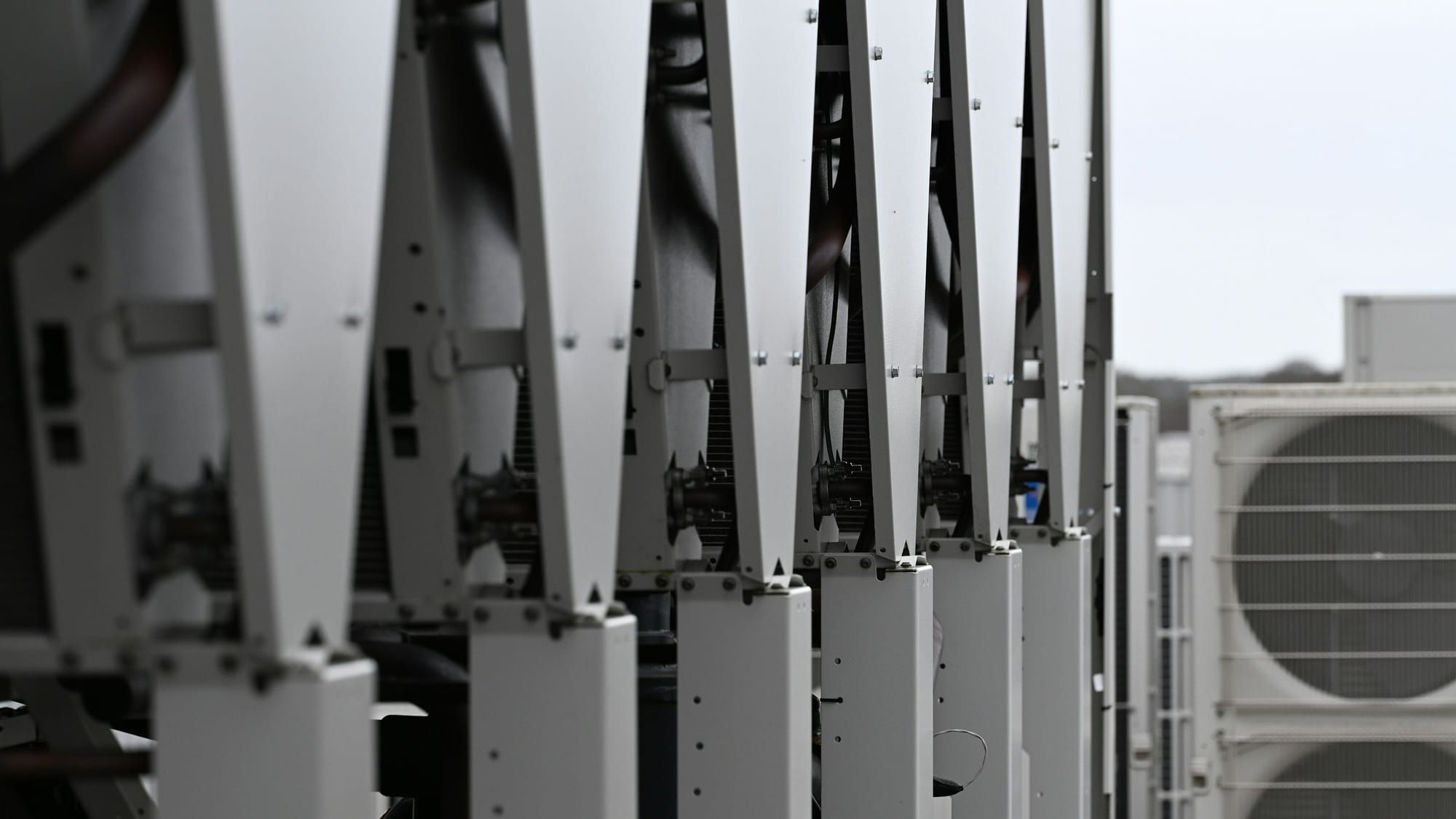
In Cambodia the limiting factor is often not the chiller but where its heat goes. Air-cooled units placed too close together, or against walls, draw in each other’s discharge air and lose capacity on the days it is needed most. Condensers in direct afternoon sun, or in plant areas without free airflow, run at higher head pressure and use more energy. Cooling towers sited where their plume recirculates, or where dust and leaves collect in the basin, lose performance and need more water treatment.
We design the layout for heat rejection first: clearances, orientation, shading where it helps, airflow paths and access for coil cleaning. It costs little on the drawing board and is expensive to correct once the plant is built.
How this fits with the rest of your plant
Cooling interacts with almost every other air system on site.
- Compressor rooms need ventilation to stop heat recirculating. We design that as part of compressed air systems.
- Heat recovery from compressors can supply hot water and reduce other heating loads. See energy optimisation.
- Humidity in many spaces needs dedicated dehumidification as well as cooling. We design both together under humidity control.
- Clean spaces depend on AHUs, filtration and pressure cascades covered under air quality and emissions.
- Monitoring: chiller status, supply temperatures and energy can be brought onto the same screen as compressed air through AirSight.
The industries that rely most on process and controlled cooling include food and beverage, pharmaceutical and healthcare, electronics and plastics and packaging. For garment and textile plants, worker comfort on large production floors is often the priority.
Maintenance in a hot, dusty climate
Dirty condenser coils, fouled tower fill and blocked filters all erode capacity and raise energy use. In a hot, dusty climate this happens faster. A planned maintenance contract covers coil cleaning, filter changes, water treatment checks, refrigerant circuit inspection and performance logging, so problems are found on a schedule rather than on the hottest afternoon of the year. Our insight article on chiller maintenance in hot climates sets out what to check.
Standards literacy
Filtration in AHUs is specified using ISO 16890 classes (ePM1, ePM2.5, ePM10 and ISO Coarse), which have replaced the older EN 779 classes. Where an AHU serves a classified clean area, the room’s cleanliness is defined under ISO 14644-1. We describe these standards to explain how we specify. We do not claim certification against them.